research process
My goal is simple: get the team to stand in our customers' shoes, and leave them excited about what they can build.
I move between mobile, web, display and physical controls teams, so no two projects look the same. But the way I work does. I'm in the room to support the team, uncover opportunities, act as a neutral voice for the customer, and turn what we learn into ideas worth pursuing.
Define the objective
Research needs come to me directly, but I also find them: in roadmap planning, design share-outs, design crits, and everyday conversations. I listen for where an assumption is going untested, where the customer's perspective has dropped out, or where a new product needs grounding.
Then I interview my stakeholders before I interview anyone else. I ask "why" a lot, until I understand what the team is really trying to decide and what success looks like.
Plan and align
I turn that understanding into a research brief: the objectives, key questions, who we need to hear from and why, the methods, and the timeline. I map research milestones onto the product roadmap so designers get insights when they can still act on them.
The brief is also where I advocate for quality. When a team asks for a quick answer to a big question, I recommend the right approach and explain the reasoning, so everyone agrees on the plan before the work begins.
Choose the method, or invent one
The question, timeline and budget decide the method. Sometimes that's quantitative, sometimes qualitative, and my favorite is mixed methods, where numbers show what is happening and conversations explain why.
When existing methods don't fit, I create new ones. Annotated preference mapping, where customers place stickers directly on concept renderings, came from needing feedback more precise than "I like A better."
my toolkit
Generative
In-depth interviews
Expert and SME interviews
Observational studies
Card sorting
Secondary research
Competitive analysis and benchmarking
Evaluative
Usability testing
A/B and concept testing
Annotated preference mapping
Moderated and unmoderated sessions
Beta and longitudinal studies
In-person customer clinics
Quantitative
Survey design
SUS and satisfaction metrics
Success metrics and KPIs
Cross-region analysis
In-app feedback analysis
Synthesis and storytelling
Thematic analysis
Journey mapping
Personas
"How might we" framing
Design principles
Highlight reels
Research leadership
Research briefs and roadmaps
Stakeholder alignment
Participant recruiting
Facilitator training
Workshops and ideation
AI-assisted research operations
Synthesize
My favorite part, and my messiest (that part's for my eyes only). I dig into everything we collected to find the major themes: what customers think, do and feel, and where those don't line up. I look as hard for the assumptions we got wrong as for the ones we got right.
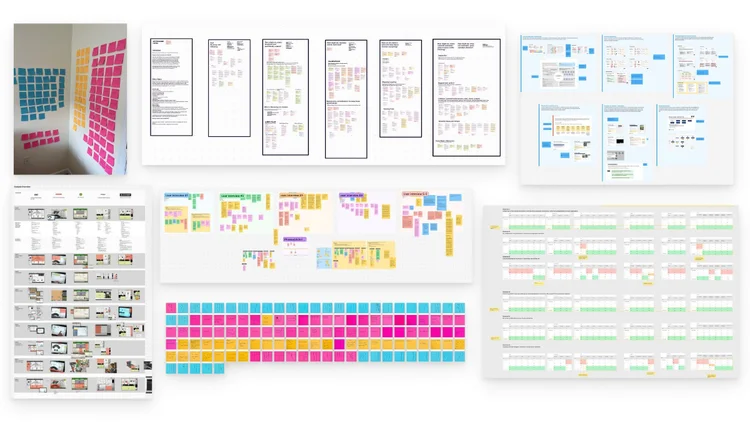
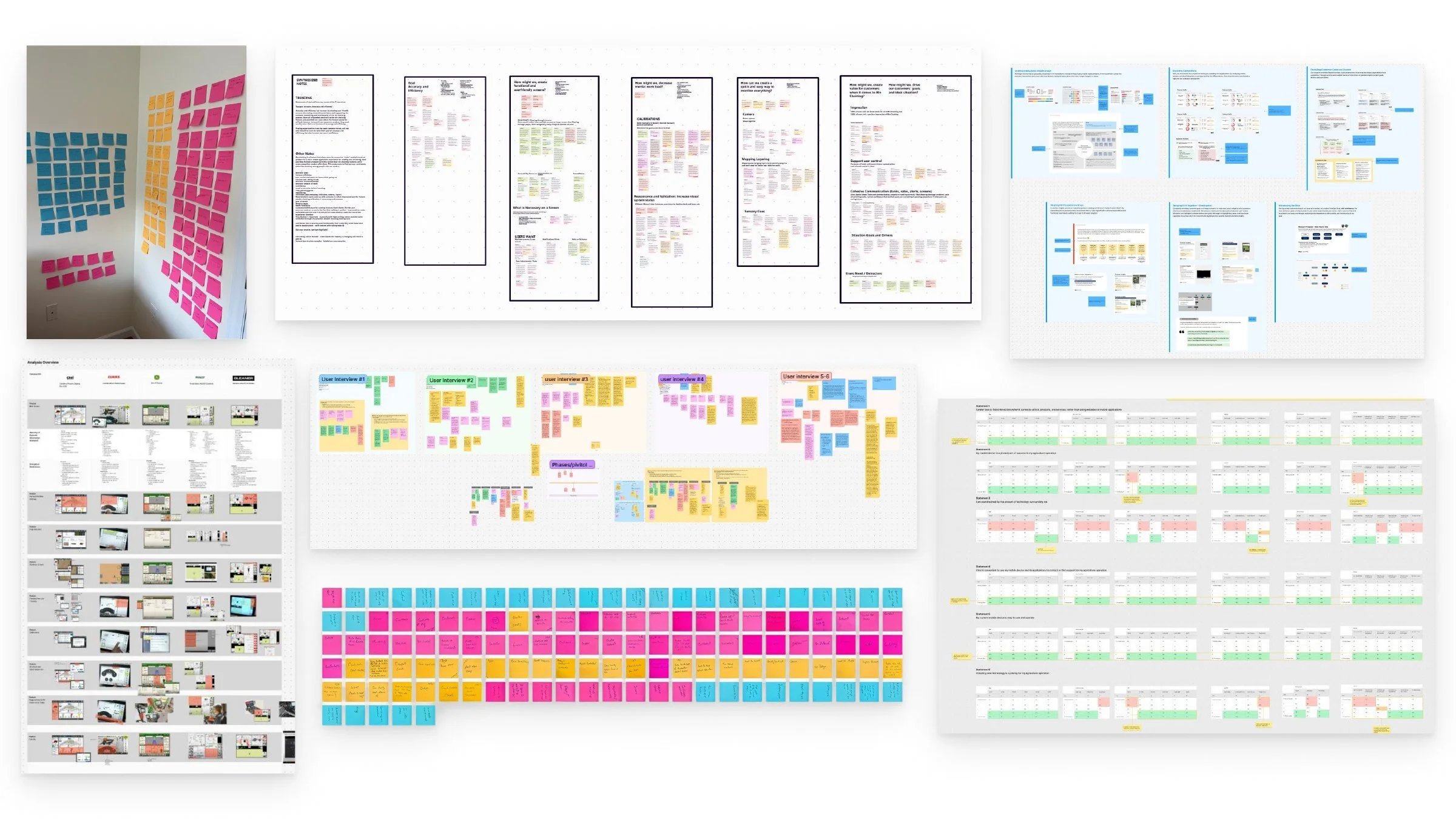
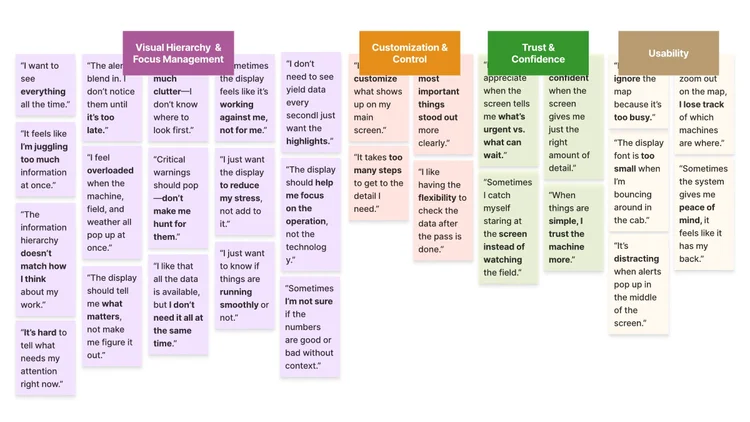
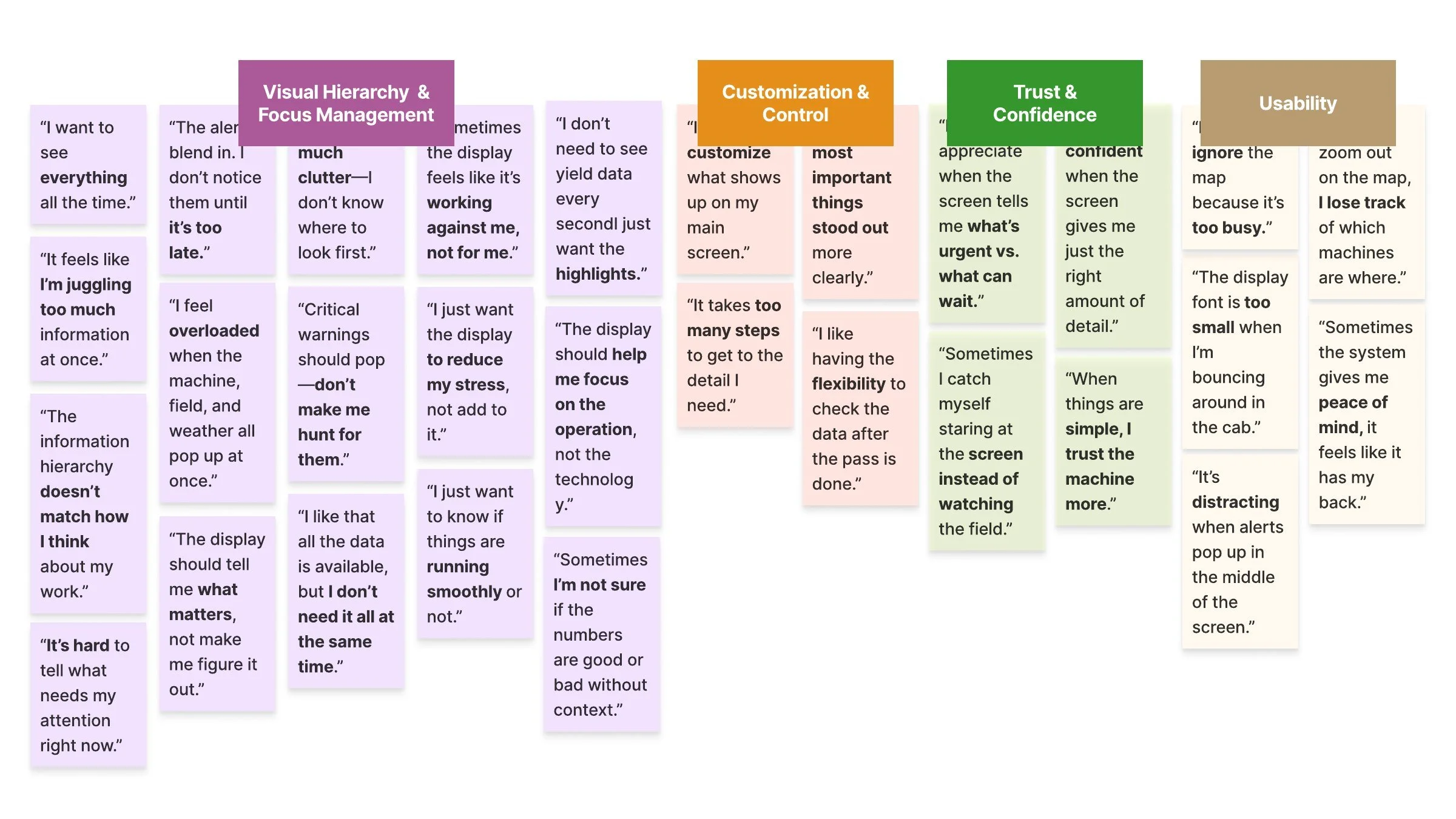
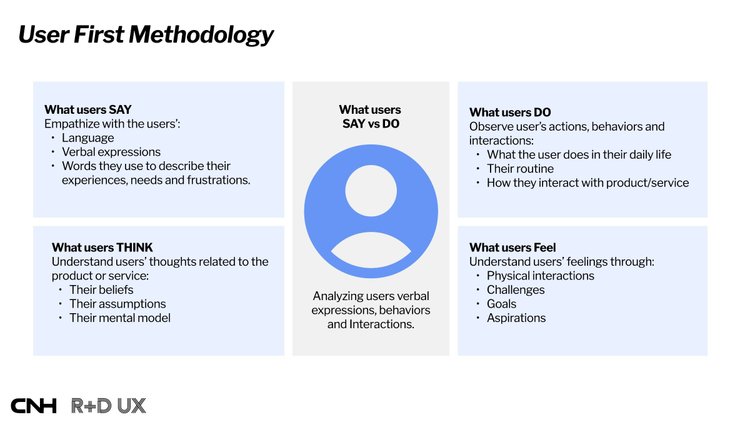
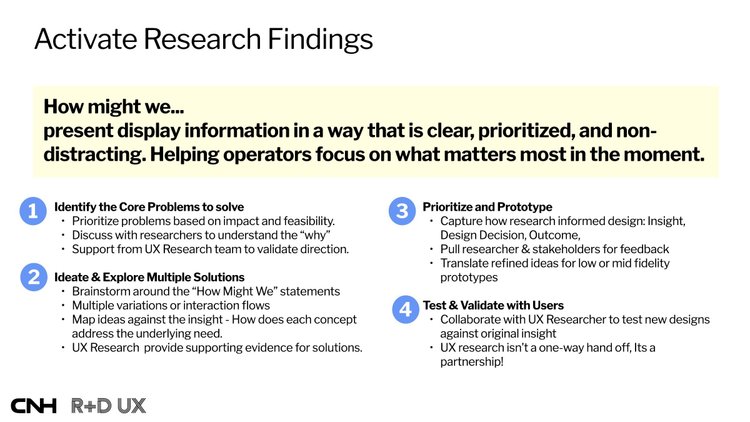
slides from my “Research TED Talk” series · click any image to expand
Deliver the story
Insights only matter if people listen, so I tell them as a story and find creative ways to get people engaged, invested, and excited. Sometimes I'm the bearer of bad news, but how you present a hard finding is everything. Every insight, even an uncomfortable one, is a chance to make the product better.
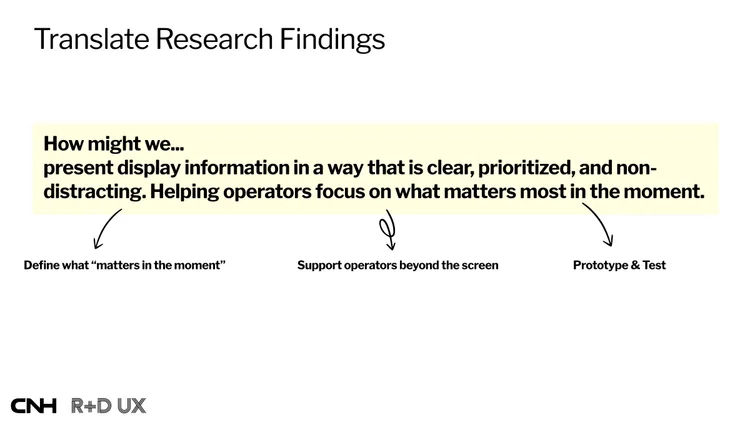
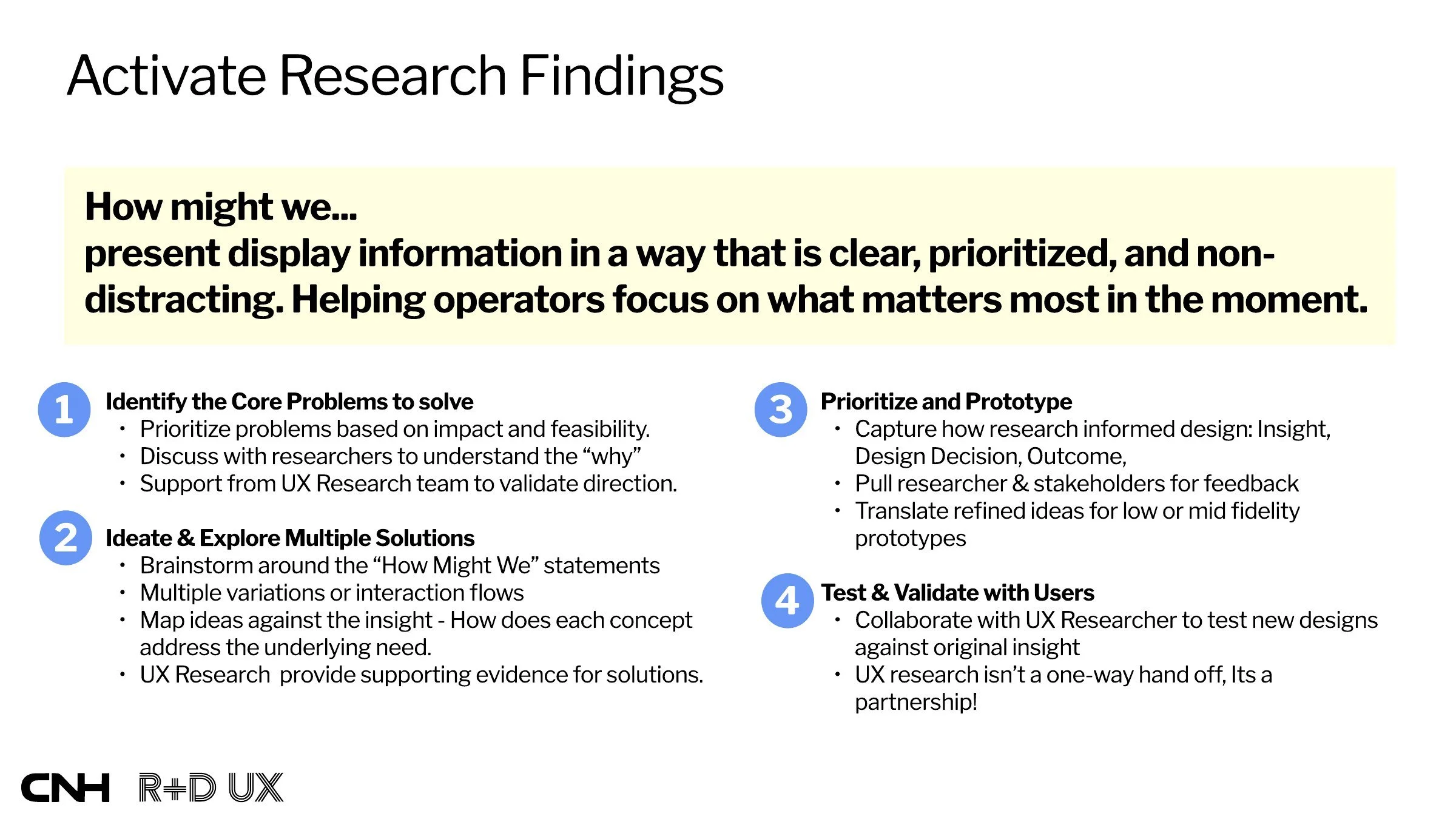
slides from my “Research TED Talk” series · click any image to expand
I never give one readout to everyone. Different audiences need different things:
Action-oriented and open-ended
Opportunity statements that point to the problem and widen the space of possible solutions. I suggest areas to explore, but I'm a researcher, not a designer, and my insights are written to leave the design to them.
- "How might we" opportunity statements
- Pain points and must-haves by product area
- Personas and journey maps
- Design principles to evaluate concepts against
- Video highlight reels in customers' own words
Measurable and decision-ready
The big picture, backed by numbers: are we on track, what's the risk, and what should we prioritize next.
- Success metrics against targets (satisfaction, acceptance, SUS)
- Adoption intent and preference over current or competitor products
- Trends across releases, regions and customer segments
- Top risks and what's driving them
- Prioritized recommendations and go/no-go readiness
Keep going
Research isn't one and done. After a readout I run workshops and solution brainstorms with designers, join design crits to bring customer insight into decisions as they happen, and plan the next round of research to test what we build.
I also run a “Research TED Talk” series, teaching my team how to ask better questions and turn findings into design opportunities.
slides from my “Research TED Talk” series · click any image to expand